Research
Our research interest involves synthesis, characterization and structural modeling of a variety of engineering materials such as glassy materials and geopolymers; and composite (bio)materials such as (poly)lactic acid-calcium phosphate composites aiming to understand structure-property relationships in these systems for designing materials with desired functionalities. Our current projects can be summarized below:
1) Design of Geopolymers Exhibiting Photocatalytic Activity as Self-Cleaning Construction Materials
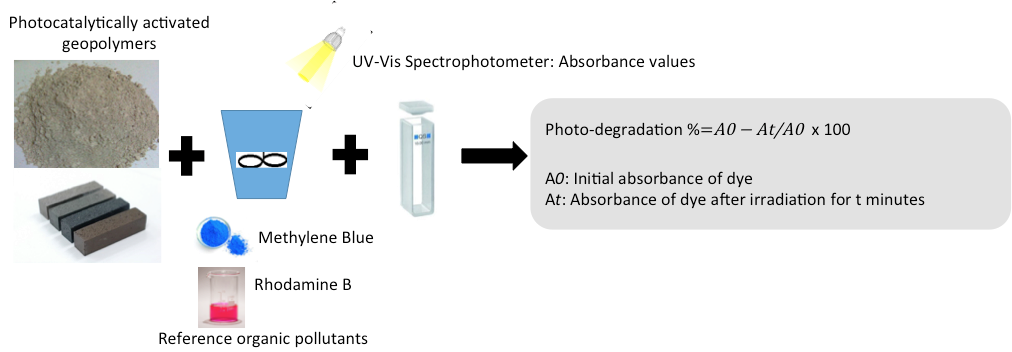
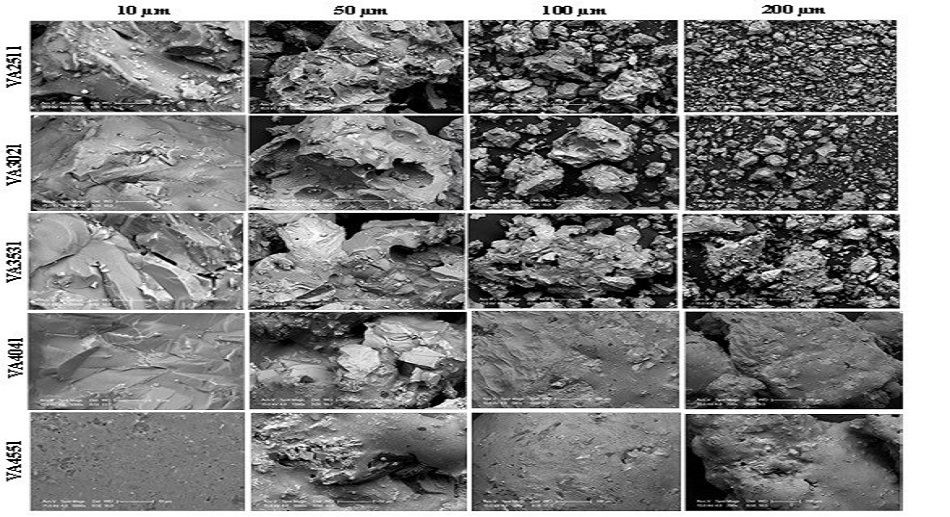
Geopolymers are amorphous structured sodium-aluminosilicate materials that are known to exhibit high mechanical performance. They are seen as future alternatives of Portland cement due to their environmentally friendly synthesis conditions and low energy consumption during production. Recent research efforts have demonstrated that these materials can be designed to exhibit photocatalytic activity, i.e. self cleaning ability. This research aims to the develop geopolymeric materials that display photocatalytic activity to degrade organic pollutants. In this context, geopolymers are synthesized based on different solid raw materials (precursors) and are post-treated to enhance photocatalytic activity. Photocatalytic activity and microstructural features in these materials are being investigated by employing UV-vis spectroscopy, FTIR spectroscopy, scanning electron microscopy (SEM) and energy dispersive X-ray (EDS) analyses to understand structure-activity relationships in the system.
2) Investigation of Structure-Mechanical Performance Relations and Geopolymerization Kinetics in Geopolymers
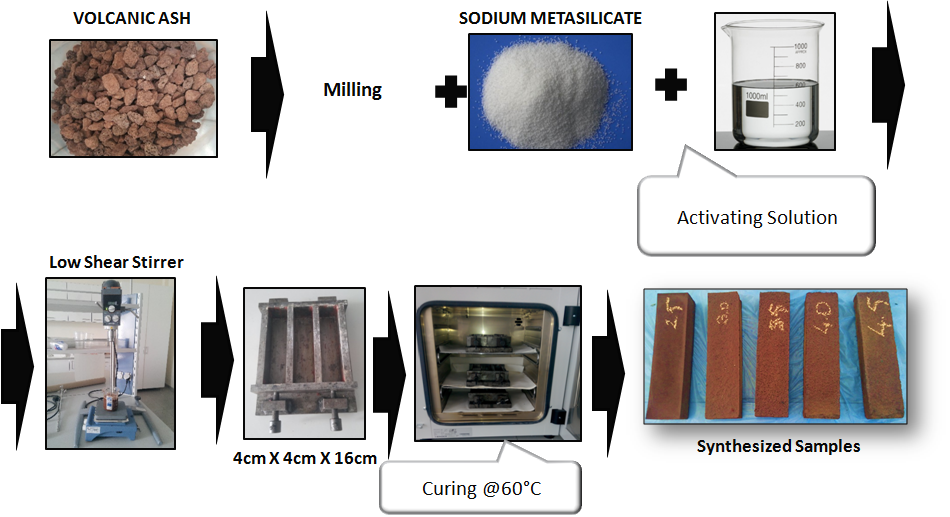
The production of Portland cement is responsible for about 7% of all human-generated CO2 emissions in the world. Geopolymers suggest to be the future green form of Portland Cement and they are categorized as ‘inorganic polymers’ formed by the polymerization reaction of a solid aluminosilicate (such as metakaolin, slag, fly ash etc..) with a highly concentrated aqueous alkali hydroxide or silicate solution. Their potential application areas are not limited to development of geopolymer cements as a potential large-scale replacement for concrete produced from Portland cement, but also include possible encapsulates for toxic and radioactive wastes, advanced heat and fire resistant ceramic materials, and even dental porcelains. We have been working on geopolymeric materials based on various raw materials including metakaolin, borax, fly ash and red mud to understand their structure and formation kinetics at fundamental level to be able to design materials with desired performances. A combination of spectroscopic, microscopic and diffraction techniques together with mechanical characterization tests are employed to elucidate structure-performance relations in these systems. Experimental work is being complemented by the molecular simulation studies using reverse Monte Carlo (RMC) modeling in order to establish 3D structures of these interesting systems.
3) Development of PLA-Calcium Phosphate Based Composite Biomaterials with High Mechanical Performance for Bone Tissue Engineering Applications
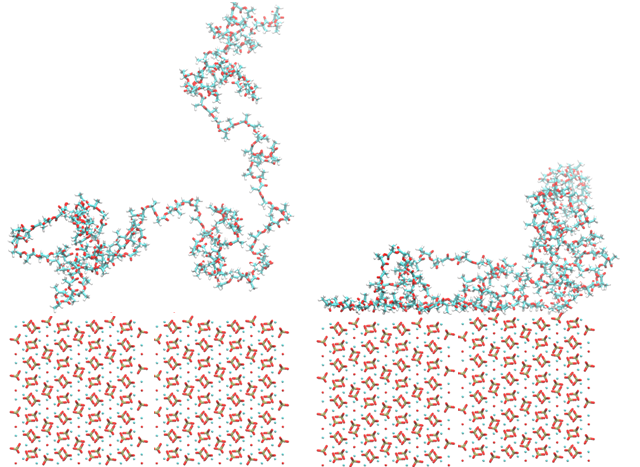
Polymer-ceramic composites are important materials for implant applications that are used as bone and hip replacements. PLA is an important biopolymer as it is biocompatible and biodegradable. Biphasic calcium phosphate (BCP), a mixture of hydroxyapetite (HA) and β-tricalcium phosphate (βTCP), presents significant advantages due to its stability, controlled bioactivity and appropriateness to be used in large bone defects. The most prominent problem in ceramic enhanced polymer composites is their low mechanical strength with respect to human bone, and loss of their mechanical strength when implanted in human body due to fast biodegredation. Therefore there is need for controlled biodegradation in addition to exhibiting mechanical strength compared to human bone. Although it is reported in the literature that chemical binding agents can offer advantages in this respect, PLA-BCP based composites with the aforementioned qualities have not been developed yet. This research program is a collaborative work with Dr. Alakent’s research group at Boğaziçi University and it is funded by TÜBİTAK. Our aim is to design composites with increased binding interactions between PLA and biphasic calcium phosphate ceramics to lead materials with high mechanical strength and controlled biodegradation profiles. For this purpose, we employ i) statistical learning methods to understand relations between the published experimental conditions and performance criteria such as tensile/compressive strength, ii) composite synthesis taking the experimental conditions from statistical models into consideration, iii) structural characterization and mechanical performance measurements of the composites, and iv) molecular dynamics simulation studies.